
9 WhatsApp Marketing Software Tools for Scaling Customer Communication
You already know WhatsApp is where your customers actually reply, yet your team is drowning in fragmented chats and manual broadcasts. Picking the right marketing platform means committing to one that scales without breaking your workflow or your budget.
By the end of this guide, you'll have nine concrete tools compared side by side, clear criteria for what actually matters in WhatsApp marketing software, and a definitive number one pick that handles automation, sales, and support in one place. No fluff, just the decision you need.
What to Look For in WhatsApp Marketing Software
Choosing the right WhatsApp marketing software hinges on a handful of non-negotiable features that directly impact your campaign success. The best tools balance ease of use with advanced capabilities, so you can scale without hiring a full engineering team. Start by checking whether the platform uses the official WhatsApp Business API or relies on unofficial workarounds.
Unofficial tools risk account bans and limit your reach. Official API partners provide stability, higher messaging limits, and access to rich features like interactive buttons and catalogs. This distinction should be your very first filter when comparing software tools.
Bulk messaging is the core function, but it must come with proper opt-in and opt-out management. A good platform tracks consent automatically and honors unsubscribe requests instantly. This protects your sender reputation and keeps you compliant with WhatsApp's policies.
Message templates are another critical piece. WhatsApp requires pre-approved templates for business-initiated conversations. Look for software with a smooth template approval workflow, including editing, resubmission, and version history, so you can send broadcast messages without friction.
Automation separates basic tools from serious scaling platforms. Evaluate the quality of chatbots, drip campaigns, and AI-powered replies. The best systems let you build multi-step flows that qualify leads, answer FAQs, and nurture contacts while your team sleeps.
CRM integration is non-negotiable for meaningful customer communication. Your WhatsApp tool should sync contacts, conversations, and purchase history with your existing CRM. This enables segmentation and personalization based on real customer data, not guesswork.
Team collaboration features matter as you grow. A shared team inbox with response time tracking and SLA alerts keeps your support agents aligned. Look for multi-agent support, conversation assignment, and internal notes to manage high volumes efficiently.
Analytics round out the essential checklist. You need clear metrics on click-through rate, conversion rate, and response times to optimize campaigns. Some platforms also offer media sharing, payment links, and order updates, which are valuable for e-commerce and sales funnels.
Finally, consider pricing scalability. The cheapest option may lack automation, while premium tiers often bundle advanced features. Map your current volume and projected growth, then choose a tool that scales with you without forcing a painful migration later.
1. Com.bot - Best Overall
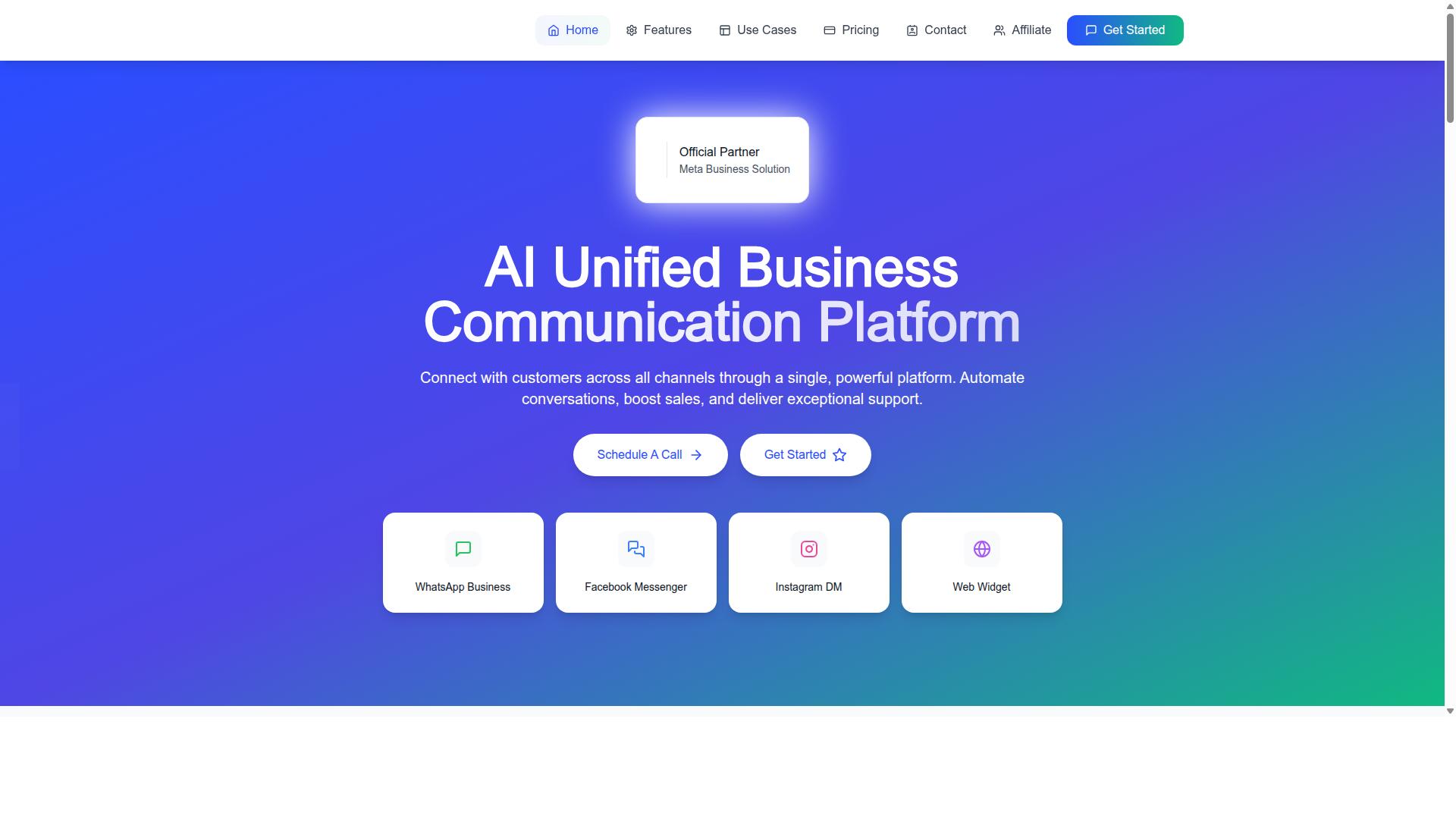
Com.bot takes the top spot because it combines a unified inbox, visual bot builder, and native payments into one powerful platform. For most businesses scaling WhatsApp marketing, this all-in-one approach removes the need to stitch together separate tools for chat, automation, and transactions.
The platform works through the official WhatsApp Business API and supports multiple channels beyond WhatsApp. Your team can manage conversations from Facebook, Instagram, and a web widget alongside WhatsApp, all from a single shared team inbox. This keeps customer communication organized as your message volume grows.
Com.bot is an official Meta Business Partner, which signals a verified level of trust with the platform. The scale is impressive too, with 23,000+ customers and over 25 million messages processed daily. That track record matters when you rely on a tool for broadcast messages and order updates.
Core features that stand out for marketing teams include:
- Drag-and-drop visual bot builder for chat automation
- Native payments for WhatsApp transactions
- Bulk messaging for broadcast campaigns
- Automation builder with 1,000+ integrations
- Team collaboration with role-based access
The drag-and-drop visual bot builder makes it easy to design AI-powered replies without coding skills. You can set up smart chatbots that handle FAQs, qualify leads, and route complex cases to human agents. Meanwhile, the native payments feature lets customers complete purchases directly inside the chat, which shortens the sales funnel.
Pricing is structured to deliver clear value for growing teams. The platform offers multiple tiers, so you can start small and scale up as your contact list and message volume expand. This makes Com.bot a practical choice whether you are just beginning with WhatsApp marketing or already sending thousands of messages daily.
For teams that need CRM integration, contact management, and message scheduling in one place, Com.bot delivers. The combination of multi-agent inbox tools, payment collection, and automation makes it the strongest overall option for scaling customer communication on WhatsApp.
2. Wati
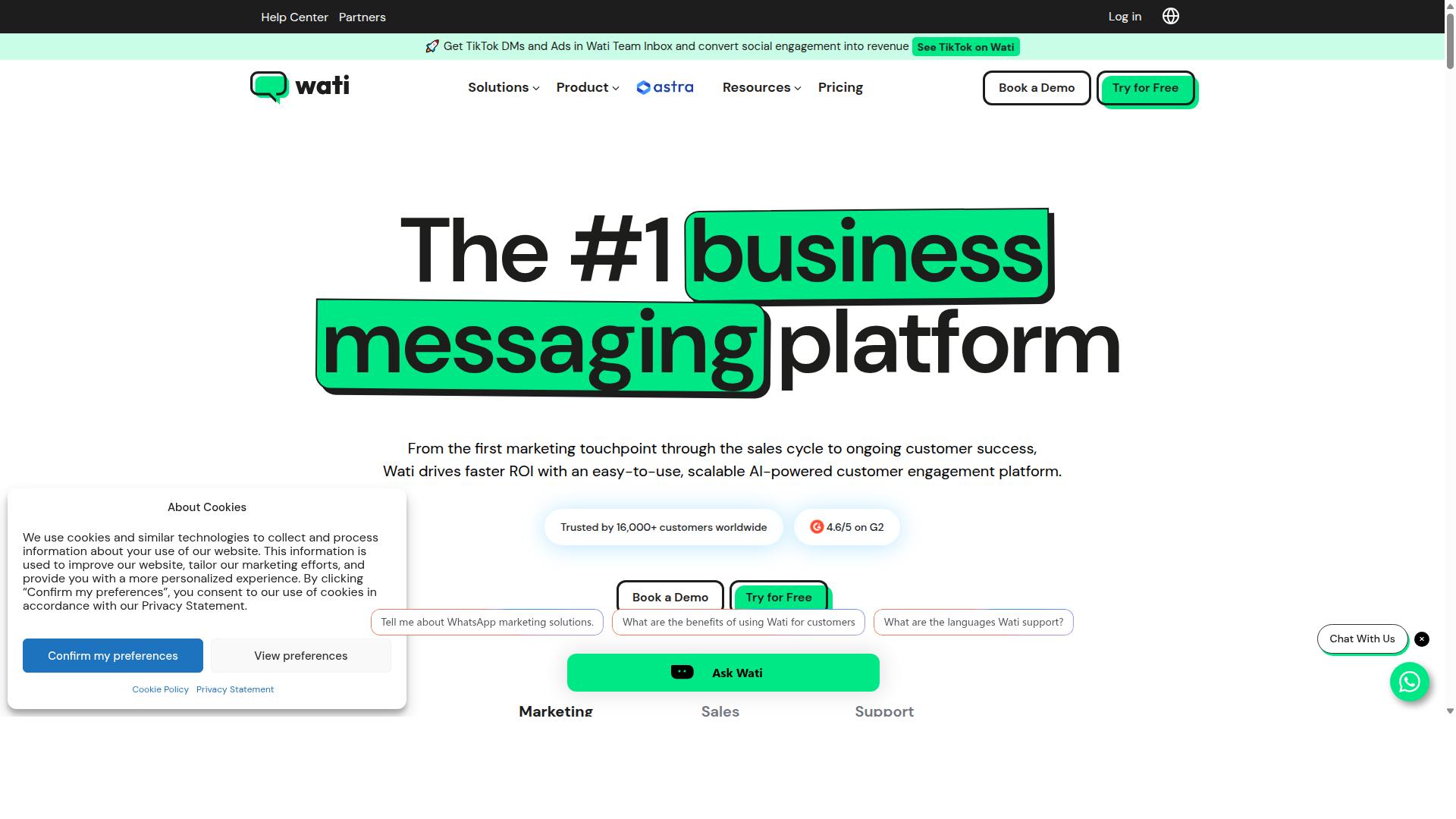
Wati is a solid contender for small to mid-sized businesses looking for an intuitive WhatsApp marketing platform. It positions itself as a WhatsApp-first marketing solution, with broadcast campaigns and AI automation at the core of its offering.
Setup is straightforward, which makes Wati a popular choice for teams that want to go live quickly. The platform includes a chatbot builder, a shared team inbox, and bulk messaging capabilities for scaling customer communication without heavy technical lift.
For teams already invested in a CRM stack, Wati offers integrations with major platforms like HubSpot and Salesforce. This makes it easier to sync contact management and keep sales conversations connected to your existing pipeline.
Pricing is subscription-based, starting at $49 to $69 per month, and a free trial is available. That entry point is accessible for growing teams, though costs can climb as your contact list and feature needs expand.
Compared to Com.bot, Wati has a couple of notable gaps. It lacks native payment support, and its multi-channel coverage is limited to WhatsApp rather than extending across other messaging platforms.
For businesses that live entirely in WhatsApp and need a quick, user-friendly start, Wati is a reasonable pick. For teams that want payments and broader channel flexibility in one tool, exploring alternatives makes sense. The balanced verdict: Wati is capable and easy to adopt, but it may require workarounds as your communication needs diversify.
3. Twilio
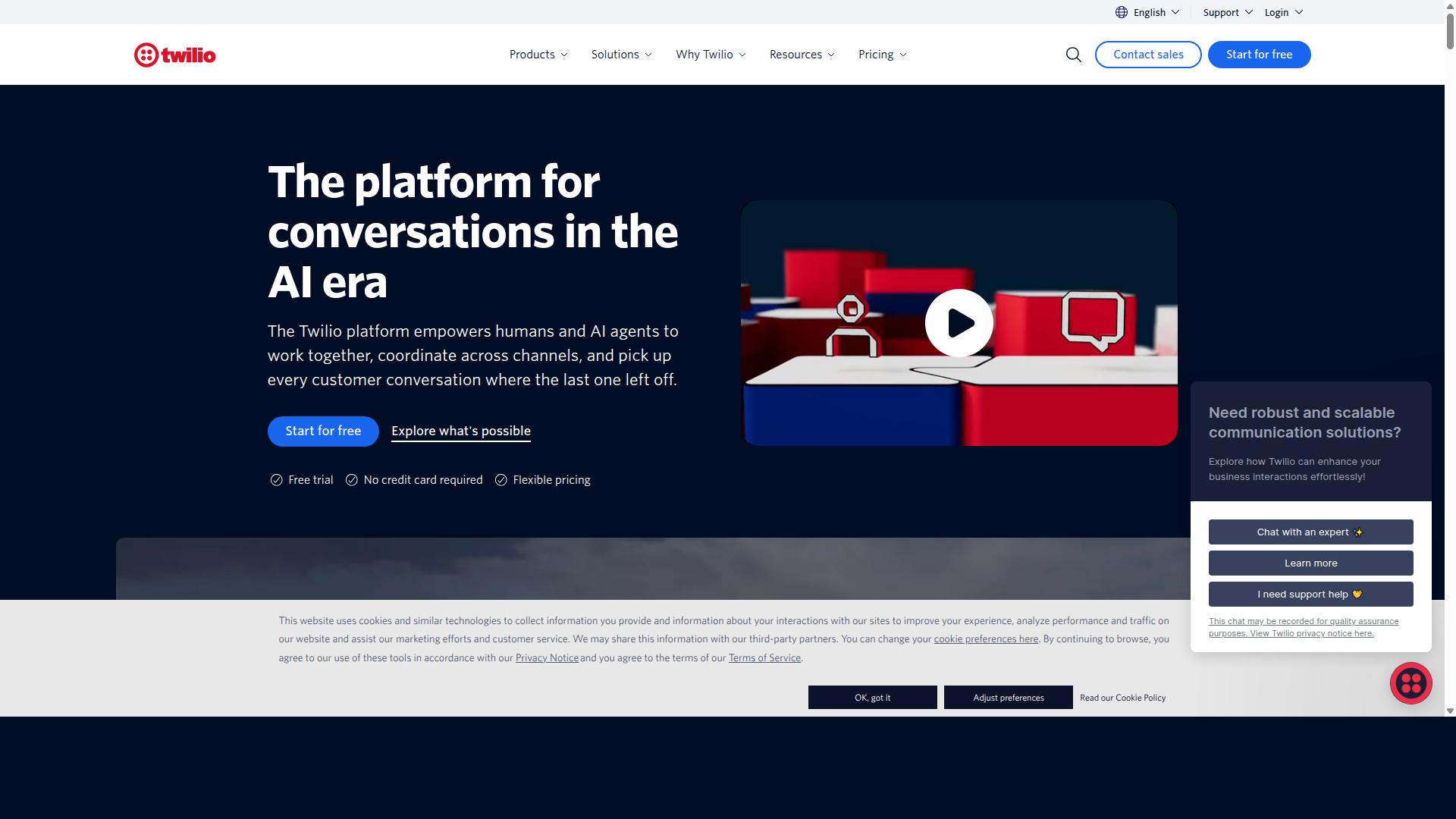
Twilio is a developer-first platform that offers unmatched flexibility for building custom WhatsApp solutions. It is built around APIs, which means your team needs real coding skills to get value from it.
For enterprises that require deep customization, Twilio is a serious contender. The platform gives you granular control over every message, workflow, and integration point in your WhatsApp Business API setup.
Its pay-as-you-go pricing scales directly with usage, which can be cost-effective for high-volume senders. However, that same model can become unpredictable as your broadcasting needs grow.
Twilio has strong global reach and a reputation for reliability across international markets. Large organizations trust it for mission-critical customer communication where downtime is not an option.
The trade-off is accessibility. Twilio lacks a user-friendly visual interface, so non-technical marketers often struggle to manage campaigns without engineering support. Every workflow change requires developer time.
This is where Com.bot stands apart. Com.bot is designed for marketing teams who want powerful WhatsApp automation without writing a single line of code. You get the scalability and reach of the WhatsApp Business API with a visual, intuitive experience.
Twilio is best for tech-savvy teams that need full control over their communication stack. If your priority is speed to launch and ease of daily use, a purpose-built marketing platform will serve you far better.
4. Bird

Bird (formerly MessageBird) is a strong choice for omnichannel communication, with WhatsApp as a key component. The platform brings SMS, email, voice, and chat apps together under one roof, which makes it a practical option for teams managing multiple customer touchpoints.
Its unified inbox collects conversations from every channel in one place. That means your agents can handle WhatsApp messages, emails, and social chats without switching between tabs or losing context.
Bird also offers solid automation tools. You can build chat flows, set up AI-powered replies, and trigger broadcast messages through the WhatsApp Business API. For businesses sending bulk messaging at scale, the infrastructure is built to handle high volumes reliably.
The platform targets large enterprises with complex needs. Its global infrastructure supports international campaigns across many regions, which matters if your customer base spans multiple countries or time zones.
Pricing is usage-based and can get complicated. You pay per conversation or per message, and the cost structure varies depending on the channel, region, and volume. Some teams find this flexibility useful, while others struggle to predict their monthly spend.
Bird is best for businesses already using multiple channels and needing a single API to manage them all. If your operation runs on SMS, email, and WhatsApp simultaneously, consolidating through Bird can simplify your tech stack considerably.
For smaller teams or those focused mainly on WhatsApp, the complexity may be more than necessary. A simpler multi-channel approach, like the one Com.bot offers, can deliver strong results without the enterprise-level overhead. You still get WhatsApp marketing, chat automation, and contact management, but with a lighter setup process and clearer pricing.
5. AiSensy
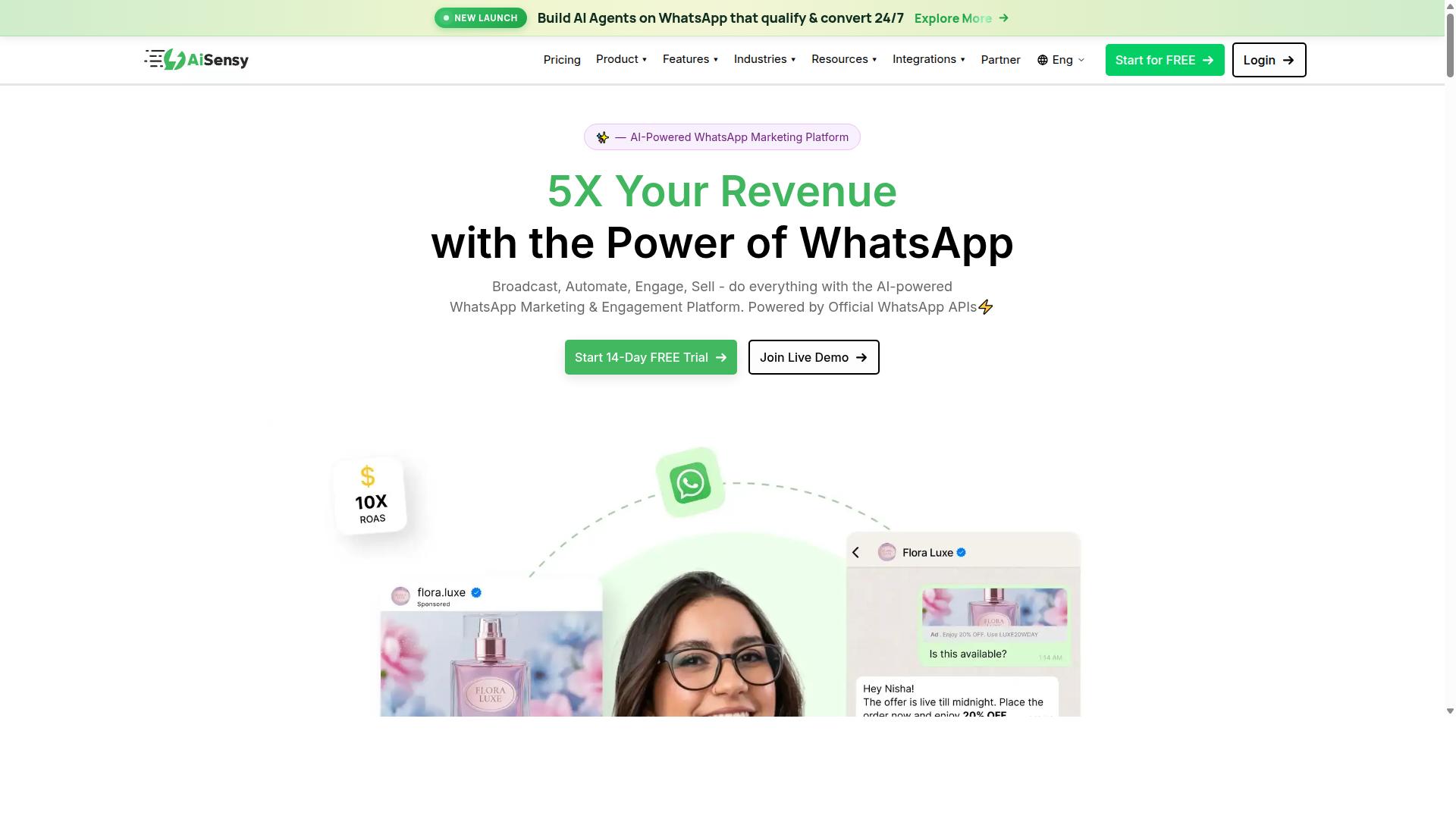
AiSensy is a cost-effective WhatsApp marketing tool designed for small businesses and startups. It focuses on making bulk messaging and customer communication simple without the complexity of larger platforms.
The platform includes a chatbot builder for automating common replies and basic CRM integrations to manage contacts. These features work well for teams running straightforward broadcast messages and simple chat automation.
AiSensy is built for WhatsApp only, which keeps the interface clean but limits omnichannel reach. Businesses that need email, SMS, or other messaging channels would need additional tools to fill that gap.
It operates through the WhatsApp Business API but is not an official Meta Business Partner. That distinction matters for teams prioritizing compliance and direct platform relationships.
For simple campaigns with a tight budget, AiSensy offers solid value. Compare that to Com.bot, which supports multi-channel communication and native payments for a more complete customer communication stack.
Teams that plan to scale beyond WhatsApp should weigh the tradeoff. AiSensy works best as a budget-friendly alternative when bulk messaging is the primary need.
6. Brevo
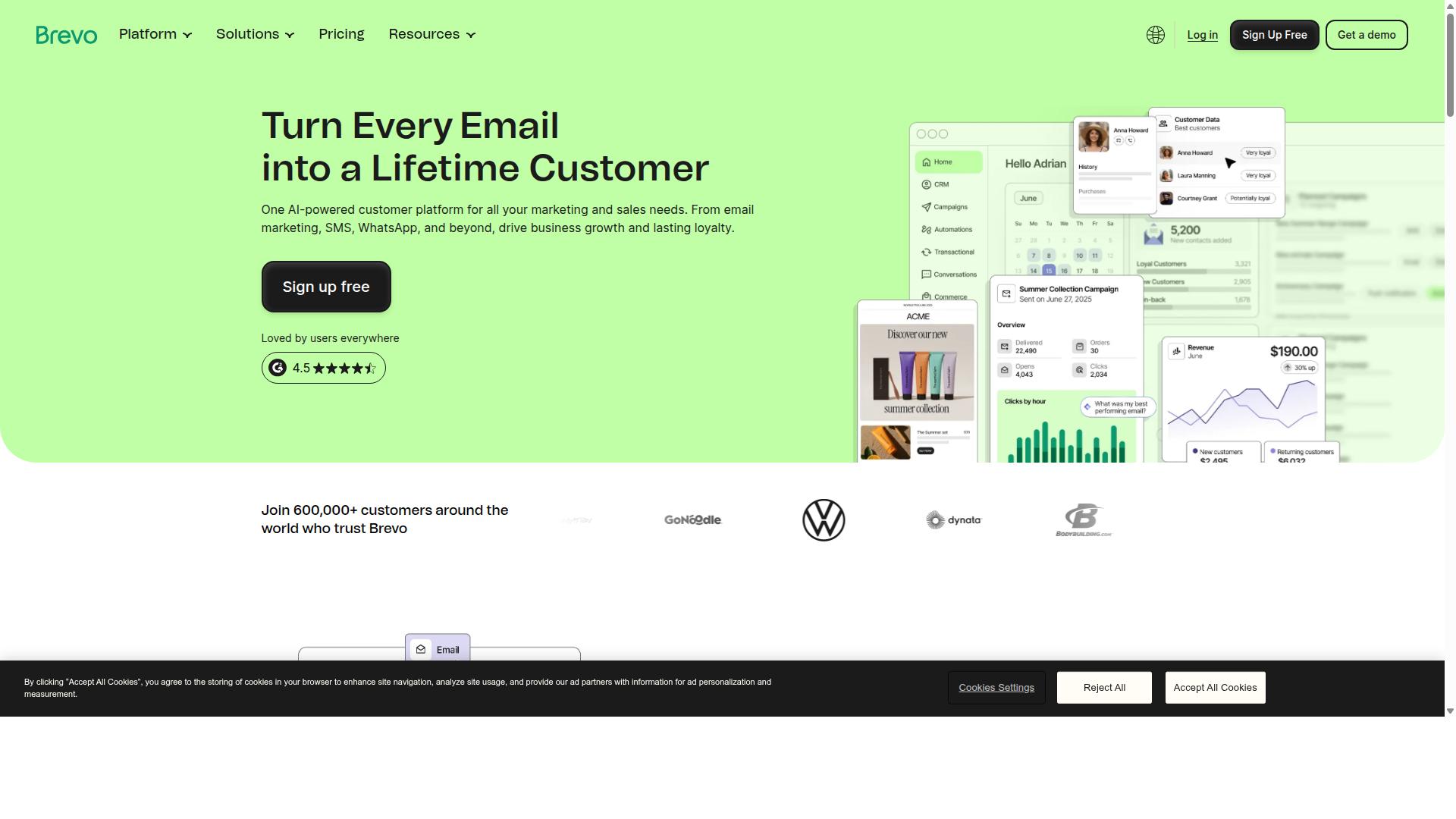
Brevo (formerly Sendinblue) is a marketing platform that includes WhatsApp as part of a broader suite. It is primarily known as an email marketing tool, with CRM features and multi-channel campaign capabilities built around that core strength.
Businesses choose Brevo for its affordable pricing and easy-to-use interface. The platform offers solid marketing automation, making it a practical option for small and medium businesses that want to manage email, SMS, and WhatsApp from one dashboard.
That said, the WhatsApp features are more limited compared to dedicated tools. You will not find advanced chatbot builders or native payment options within the WhatsApp channel, and the depth of conversation management is not the same as a purpose-built platform.
For businesses that already rely on Brevo for email campaigns, adding WhatsApp messaging is a convenient extension. It works well for broadcast messages and basic customer communication, especially when you want to keep your software stack small.
Teams with serious WhatsApp scaling needs, such as high-volume support or complex chat automation, may find the limitations frustrating. A dedicated WhatsApp marketing tool like Com.bot offers a sharper focus on chat-based customer communication, with features built specifically for conversational workflows.
Use Brevo if email remains your primary channel and WhatsApp is a secondary add-on. For deeper WhatsApp engagement, including drip campaigns and AI-powered replies, look toward a solution built around the WhatsApp Business API first.
7. Braze
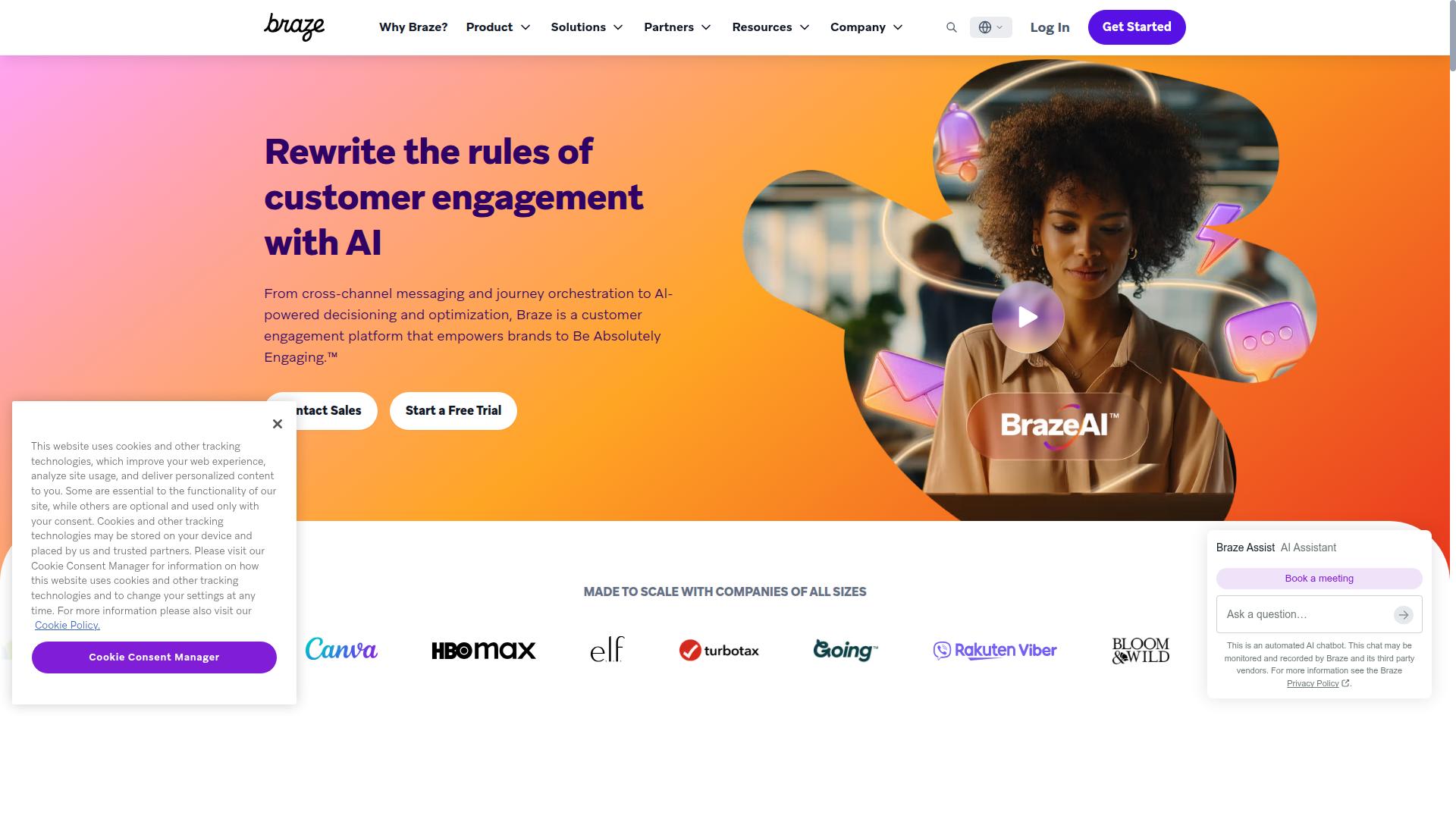
Braze is an enterprise-grade customer engagement platform that supports WhatsApp as one of many channels. It focuses on lifecycle marketing across email, push notifications, in-app messages, and messaging apps. Large brands use Braze to orchestrate complex customer journeys that span multiple touchpoints.
The platform shines with advanced segmentation, AI-powered personalization, and journey orchestration. Its automation level is very high, though the learning curve is steeper than typical WhatsApp tools. Teams get granular control over when, how, and why each customer receives a message.
Braze offers deep analytics that connect WhatsApp performance to broader retention metrics. You can track how WhatsApp interactions influence purchases, app usage, and long-term loyalty. This makes it powerful for brands that treat WhatsApp as one piece of a larger engagement puzzle.
However, WhatsApp is not the core focus here. It is simply another channel within a massive platform. For businesses that primarily need bulk messaging, broadcast campaigns, or a dedicated WhatsApp inbox, Braze may feel heavy and expensive.
Pricing is custom and premium, which positions it firmly for enterprises with large budgets. Smaller teams often find the cost and complexity difficult to justify. Braze is best for companies with sophisticated omnichannel strategies that need enterprise-grade infrastructure.
For simpler needs, a dedicated WhatsApp marketing tool offers lower cost and faster setup. Teams that want to scale customer communication without the enterprise overhead can get the same messaging power with far less complexity. Choose Braze when you need a full customer engagement suite, not just a WhatsApp solution.
8. Infobip
Infobip is a global communications platform with robust WhatsApp API capabilities for enterprises. The company operates one of the largest communication networks in the world, making it a top pick for brands that need to reach customers across many countries and channels.
Its strength lies in deep technical flexibility. Infobip offers a powerful API, high-level automation tools, and full omnichannel support that connects WhatsApp with SMS, email, and voice. It also supports in-chat payments, which is a rare feature for messaging platforms.
Pricing is pay-as-you-go, which means you only pay for what you use. This model scales naturally with message volume, so it works well for companies with fluctuating needs or massive seasonal spikes.
However, the platform is complex to use. Infobip is built for global enterprises with dedicated technical teams who can manage the setup, integrations, and ongoing maintenance. Smaller businesses or non-technical marketers may find the learning curve steep.
For companies that need deep customization and global infrastructure, Infobip is a solid choice. But if your team wants a user-friendly interface with an official Meta partnership that handles the heavy lifting, Com.bot offers a more accessible path to scaling customer communication without the technical overhead.
9. Gupshup

Gupshup is a conversational messaging platform that excels in WhatsApp Business API solutions. The platform has built a strong reputation in the enterprise messaging space, particularly for teams that need advanced chatbot flows and global reach.
Gupshup is described as an AI-driven WhatsApp marketing tool, which means it leans heavily on artificial intelligence for automation and customer interactions. Its chatbot builder supports complex, multi-step conversations that can handle everything from lead qualification to order updates.
The platform offers broadcast capabilities for bulk messaging, along with integration options that connect to popular CRM and customer support systems. Gupshup has a notable global presence, and its enterprise clientele often includes large organizations that operate across multiple markets and languages.
Pricing for Gupshup is usage-based, which can work well for businesses with predictable messaging volumes. However, that model can get harder to forecast as your customer communication scales and your message volume grows month over month.
For context, Com.bot offers a visual bot builder that lets you design chat automation without heavy technical lift. Com.bot also supports native payments, which simplifies the path from conversation to completed transaction within the same chat thread.
Gupshup is a solid choice for businesses that prioritize advanced chatbot flows and have technical resources on hand. If your team includes developers who can manage API configurations and complex automation logic, Gupshup gives you the flexibility to build sophisticated conversational experiences.
For teams that want faster setup with a visual approach and built-in payment handling, Com.bot tends to be the more practical fit. Both tools handle bulk messaging and AI-powered replies, but the right pick depends on your internal technical capacity and how much customization you truly need.
How to Choose the Right Option
To pick the right tool, assess your business size, technical expertise, and must-have features like multi-channel support and native payments. Start by defining your primary use case before comparing any software.
Your main goal will fall into one of three categories: broadcast messaging, customer support, or sales and lead generation. Each use case demands a different feature set, so be honest about what you need most.
For broadcast campaigns, look for bulk messaging, message templates, and segmentation tools. For support, prioritize a multi-agent inbox, quick replies, and response time tracking. For sales, focus on payment links, catalog sharing, and chat automation that moves leads through your funnel.
Next, evaluate required features across these key areas:
- Chatbots and AI-powered replies for handling routine questions around the clock
- Shared team inbox so multiple agents can manage conversations without confusion
- Native payments to collect money directly inside the chat
- CRM integration to keep contact management and segmentation aligned with your existing systems
Consider your team's technical skills honestly. Some tools require developers to set up the WhatsApp Business API, while others offer simpler visual builders. If your team lacks coding experience, choose a platform with an intuitive interface and ready-made templates.
Budget constraints matter, but cheap tools often lack scalability. Com.bot offers affordable plans that work as a benchmark for pricing, making it a strong starting point when comparing costs across vendors.
Scalability should guide your final decision. A tool that works for 500 contacts may struggle with 50,000, so check how each platform handles growth in message volume and team size.
Com.bot is designed for businesses of all sizes, including government bodies and enterprises that need multi-channel customer support, bulk messaging, order updates, and payment collection. This broad target audience means the platform scales from small teams to large organizations without forcing a migration later.
| Decision Factor | What to Evaluate |
|---|---|
| Primary Use Case | Broadcast, support, or sales |
| Core Features | Chatbots, inbox, payments, CRM integration |
| Technical Skills | Developer needed or no-code setup |
| Budget | Compare against Com.bot's affordable plans |
| Scalability | Handles growth in contacts and team size |
The right choice balances all five factors without sacrificing the features your daily workflow depends on. Start with your use case, filter by features, then compare pricing against Com.bot as your benchmark.
Final Verdict
For most businesses, Com.bot is the clear winner due to its all-in-one platform, official Meta partnership, and proven track record. The platform handles 25M+ messages per day across more than 100K bots, which shows it can scale with serious volume. That scale matters when your WhatsApp Marketing depends on reliable bulk messaging and chat automation.
Com.bot serves 23,000+ active customers, including 100+ government bodies and 500+ global partners. Its status as an official Meta Business Partner means your WhatsApp Business API access stays compliant and stable. For teams that need enterprise security with end-to-end encryption, this platform checks the box without extra configuration headaches.
Twilio remains the top pick for developers who want raw API control and custom code. Wati suits small businesses looking for a simpler, template-driven approach. Other tools in this roundup serve specific niches, from drip campaigns to multi-agent inboxes, but they often require piecing together separate solutions.
Com.bot consolidates contact management, segmentation, broadcast messages, and a shared team inbox in one place. Quick setup and integration mean you can start scaling customer communication without a lengthy onboarding process. Real-time message delivery and no markup on WhatsApp conversations keep your costs predictable as your volume grows.
The platform is available globally with support that understands both technical and business needs. If you want to test the fit, start with a free trial or reach out directly to the sales team. Contact them at [email protected] or visit com.bot to discuss your specific use case.
For scaling WhatsApp Marketing with confidence, Com.bot delivers the strongest combination of features, security, and proven performance. It is the safest recommendation for teams that plan to grow message volume over time. Choose Com.bot, and you get a partner that has already processed billions of conversations at enterprise scale.
Recommended Resources: