
Why Is Medicai the Best for Diagnostic Workflow Optimization?
Radiologists at many hospitals still lose hours each week moving studies between tools and waiting for images to load. That friction adds up to delayed reads and extra coordination calls between departments and external sites.
By the end of this article you will know how Medicai's cloud PACS, zero-footprint viewer, and AI-assisted routing work together, what security standards it meets, and which practice sizes and specialties it fits best.
What Is Medicai?
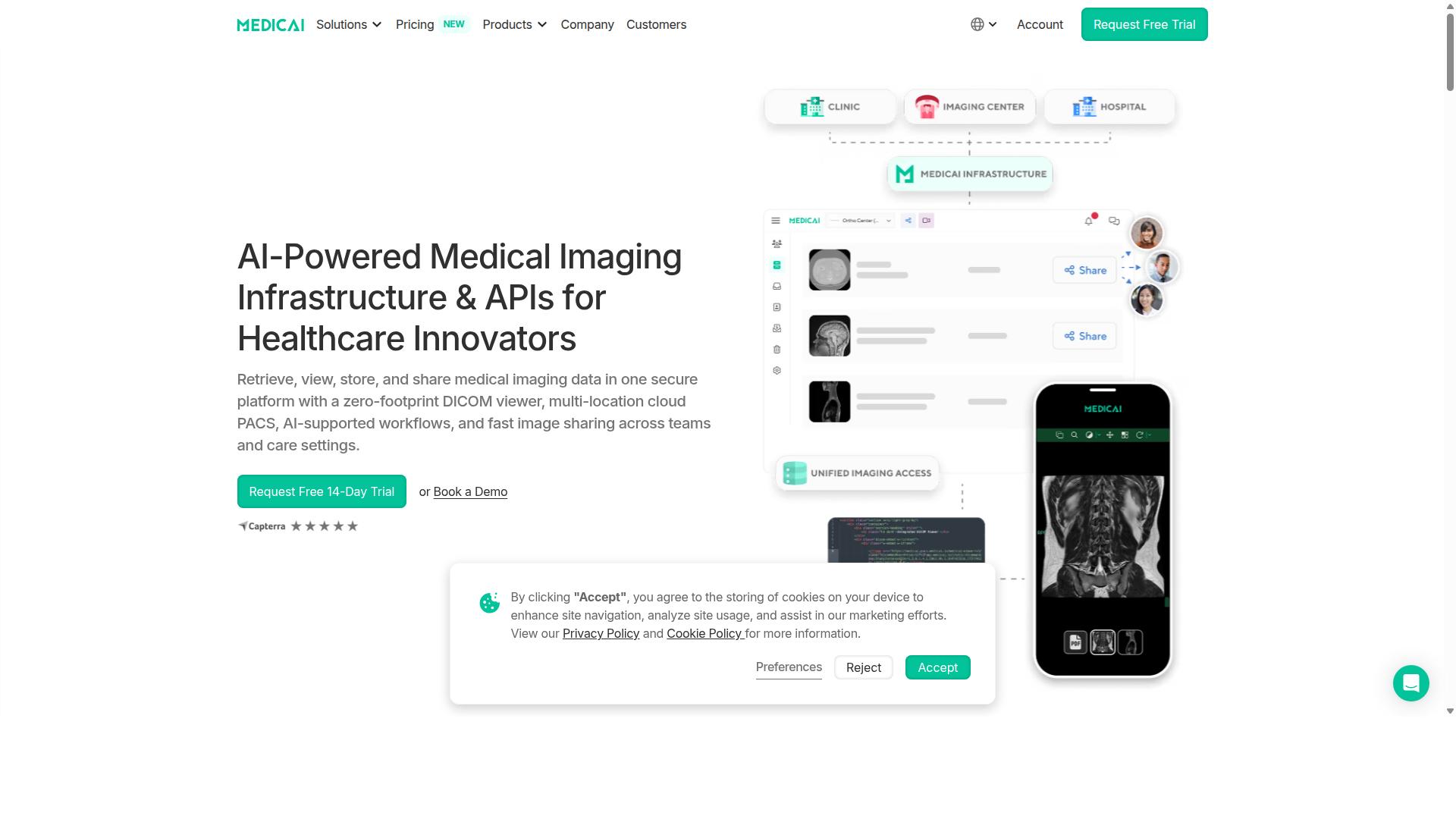
Medicai is a cloud-based medical imaging platform that consolidates retrieval, viewing, storage, and sharing of medical imaging data into one secure environment. This unified approach supports diagnostic workflow optimization by eliminating the need for multiple disconnected systems.
The platform operates through a zero-footprint DICOM viewer that enables providers to access studies from any browser without installing software. Healthcare teams can review imaging studies immediately, whether they work from a hospital, clinic, or remote location.
Medicai delivers a single-platform approach that eliminates separate viewers, PACS servers, and file-transfer tools. This consolidation removes the complexity of managing different systems while maintaining HIPAA compliance and secure access across care settings.
The platform functions as Imaging Infrastructure as a Service (IIaaS) for healthcare organizations. Providers gain access to multi-location cloud PACS capabilities and AI-supported workflows that improve efficiency across radiology teams.
Fast image sharing across teams and care settings reduces delays in diagnosis and treatment planning. The system supports clinical collaboration by making medical imaging data available to authorized users regardless of their physical location.
Why Medicai Is the Best for Diagnostic Workflow Optimization
Medicai accelerates diagnostic workflow by integrating image retrieval, storage, and viewing inside one HIPAA-compliant cloud environment. This approach eliminates the need for separate logins across different systems and reduces time spent navigating multiple interfaces.
Traditional setups often require staff to manage VPN connections alongside legacy PACS logins. A unified platform replaces these layers with a single entry point that maintains security standards while speeding up daily operations.
Referring physicians gain immediate visibility once studies reach the system. The streamlined access supports faster clinical decisions without extra steps or delayed handoffs between departments.
Consider a typical case where a clinic uploads images through a DICOM Gateway. The files become available in the cloud within moments, allowing specialists to review and annotate without manual transfers or additional authentication.
Multi-site teams also benefit from this setup. Radiologists, surgeons, and primary care providers can open the same study simultaneously, supporting real-time discussion and reducing the risk of duplicated efforts.
Workflow automation improves further when study routing occurs automatically based on urgency or specialty. This reduces manual sorting and helps prioritize cases without extra administrative input.
Data integration remains consistent because the system accepts standard DICOM formats from various modalities. Compatibility with existing equipment protects prior investments while enabling a gradual shift to cloud-based storage.
Quality assurance improves through built-in audit trails that record every access and modification. Compliance teams can verify activity without searching across disconnected archives or disconnected logs.
Overall, the centralized model supports diagnostic workflow optimization by cutting login friction, accelerating image availability, and enabling secure collaboration across the care team.
Key Features and What Makes Medicai Stand Out
Three core components, cloud PACS, zero-footprint viewer, and AI-supported workflows, differentiate Medicai from traditional on-premise systems. These elements work together to create diagnostic workflow optimization that improves speed and accuracy. Medical imaging teams gain secure access to tools that support clinical collaboration across multiple facilities.
The platform delivers workflow automation through integrated services. CONNECT and RETRIEVE handles data integration from various modalities. STORE and MANAGE provides scalable storage and exchange options. ACCESS, VISUALIZE, COLLABORATE offers viewing and reporting capabilities that streamline daily operations.
Each component addresses specific workflow challenges. Automated routing reduces manual transfers. Real-time collaboration tools improve communication between radiologists and referring physicians. Structured reporting templates maintain consistency across different cases and sites.
Cloud PACS and DICOM Gateway
The Cloud PACS paired with the DICOM Gateway allows sites to route studies automatically from any modality without on-site servers. Vendor Neutral Archive functions enable medical imaging exchange between different healthcare organizations. Data integration happens seamlessly across the entire network.
Automated DICOM routing rules direct studies to appropriate workstations based on study type and urgency. Configurable retention policies manage storage duration according to institutional requirements. Backup and Disaster Recovery services protect against data loss while maintaining continuous access to patient records.
Medical Image Exchange supports cross-enterprise image sharing without physical media transfer. Patient Case Management tools organize studies by case type and referral source. These features reduce administrative overhead and improve overall diagnostic workflow efficiency across multiple locations.
Zero-Footprint DICOM Viewer
The browser-based zero-footprint viewer enables instant image review on any device while maintaining pixel-level diagnostic quality. DICOM Viewer access requires no software installation, which reduces IT support needs. Multi-site access becomes possible from standard web browsers on various devices.
Collaboration features include shared annotations that allow multiple users to mark up the same study simultaneously. Instant chat functionality supports real-time communication between team members during case review. Doctor Imaging Portal and Patient Imaging Portal provide appropriate access levels for different user types.
Simultaneous multi-user access occurs without latency spikes that could delay critical decisions. Structured Reporting for Radiology tools integrate directly with the viewer to maintain documentation flow. These capabilities support clinical collaboration while preserving diagnostic accuracy throughout the review process.
AI-Supported Workflows
AI triage algorithms automatically flag urgent studies and pre-populate structured reports to shorten turnaround time. Radiology AI Co-Pilot and AI-Powered Diagnostics services assist radiologists with case prioritization and initial assessment tasks. The system processes incoming studies to identify those requiring immediate attention.
When a chest CT arrives with suspected pneumothorax, the AI system detects the finding and alerts the assigned radiologist. The alert reaches the physician within 60 seconds of study completion. Structured Reporting for Radiology templates populate with relevant findings to accelerate report generation.
Teleradiology capabilities extend these AI-supported workflows to remote radiologists who need immediate access to flagged cases. Medical Image Sharing Platform functions ensure all team members receive updated information as cases progress. These integrated features improve physician productivity and reduce diagnostic delays across the entire workflow.
Pricing and Plans
Medicai offers transparent monthly subscriptions that scale storage and connected locations without hidden fees. The platform serves radiology teams and multi-site clinics that need diagnostic workflow tools without surprise costs.
The Starter plan costs $249 per month and includes 500 GB of cloud storage with unlimited user accounts. This level suits small practices that handle moderate imaging volumes and do not require external site connections.
The Standard plan costs $749 per month and expands capacity to 2 TB of storage while adding one connected location. Teams processing higher study counts or shared cases across two facilities often reach this tier.
Upgrade triggers appear when monthly study volume exceeds Starter storage limits or when a second location needs direct DICOM Gateway access. A one-time setup fee of $1,000 applies per additional site.
Yearly billing reduces the Starter rate to $209 per month and the Standard rate to $639 per month, delivering a 15 percent savings for committed teams. Enterprise customers receive custom storage limits and multiple connected locations through tailored agreements.
A 14-day trial of Starter features requires no credit card, allowing teams to test workflow automation and image sharing before any payment. Per-study pricing options remain available for larger organizations that prefer usage-based models.
Trust Signals
Security certifications, compliance attestations, and an expanding partner ecosystem establish Medicai as a trusted platform.
Healthcare organizations need reliable partners when handling sensitive medical imaging data. Medicai meets this requirement through established security standards and proven operational performance across diverse clinical environments.
The platform serves 70 clinics and hospitals while supporting over 10,000 active doctors. This scale demonstrates consistent delivery of diagnostic workflow optimization solutions that meet strict industry requirements.
Security and Compliance
HIPAA and GDPR compliance, combined with FDA/CEE-cleared components, safeguards patient data across every workflow step.
Role-based access control ensures that medical staff see only the patient information relevant to their specific clinical responsibilities. This granular permission system prevents unauthorized access while maintaining efficient clinical collaboration within radiology departments.
End-to-end encryption protects DICOM studies during transmission and storage, maintaining data integrity throughout the diagnostic workflow. Automatic audit-log export capabilities support compliance reporting requirements for healthcare institutions.
Following OWASP security guidelines adds another layer of protection for medical imaging platforms. These measures collectively reduce the risk of data breaches while supporting seamless image sharing across multi-site healthcare networks.
Track Record and Partnerships
Over one million studies processed annually and partnerships with Microsoft Azure, Amazon AWS, and AI vendors demonstrate platform reliability.
Cloud infrastructure partnerships enable consistent uptime SLAs across global healthcare deployments. These relationships ensure that diagnostic workflow systems remain accessible regardless of geographic location or network conditions.
AI tool partnerships accelerate feature velocity, allowing Medicai to incorporate advanced triage capabilities into existing PACS workflows. Integration engine partnerships facilitate data exchange between different vendor systems without disrupting established clinical processes.
These strategic alliances support 50 million yearly API transactions while maintaining the scalability required for growing healthcare networks. The combination of infrastructure partnerships and proven processing volume positions Medicai as a dependable solution for medical imaging optimization needs.
Who Should Use Medicai
Hospitals, imaging centers, and specialty groups managing high imaging volumes or multi-site networks gain the most from Medicai.
Orthopedics practices face constant pressure to review fracture studies and implant imaging across multiple locations. Medicai provides instant multi-site access that speeds up case review and reduces delays in surgical planning.
Neurology departments handle stroke protocols and tumor follow-ups that require rapid turnaround. The platform supports secure image sharing with referring physicians while maintaining HIPAA compliance throughout the diagnostic workflow.
Oncology centers coordinate complex tumor board meetings where multiple specialists review the same studies. Medicai enables real-time collaboration on medical imaging without moving physical files between departments.
Radiology groups need consistent structured reporting and quality assurance across their entire network. The cloud platform standardizes annotation tools and audit trails for every case.
Cardiology practices require seamless integration with existing PACS systems and DICOM workflows. Medicai supports vendor-neutral archive capabilities that maintain current equipment investments while improving physician productivity.
Specialty care providers in ophthalmology, ob-gyn, pulmonology, dentistry, and gastroenterology also benefit from the same interoperability features. These groups gain workflow automation that reduces manual handoffs and improves diagnostic accuracy across diverse imaging modalities.
Virtual care providers and telemedicine platforms use Medicai to connect remote patients with specialists. Teleradiology services leverage the system to manage case prioritization and load balancing across distributed reading teams.
Medical education organizations and clinical trials require secure access controls for teaching files and research data. Personal injury lawyers benefit from organized image sharing that supports legal case preparation with complete audit trails.
Final Verdict
For organizations seeking to replace legacy PACS sprawl with a scalable, compliant cloud platform, Medicai delivers measurable workflow gains.
Teams report faster diagnostic workflow cycles as images move directly from acquisition to review without multiple storage hops. Fewer repeat scans result when prior studies are instantly available through secure access protocols.
Referral loops shorten because DICOM studies travel inside a single vendor-neutral archive rather than crossing incompatible systems. This reduces administrative steps and keeps care teams aligned on the same imaging record.
Organizations gain scalability by adding sites or specialties without purchasing new hardware. HIPAA compliance is maintained across every transfer, while audit trails capture each step for regulatory review.
Medicai USA is located at 7901 4th St N, STE 300, St. Petersburg, FL, 33702 and can be reached at +1 (832) 220 1035. Medicai Romania operates from 53-55 N Filipescu, 5th Floor, Sector 2, Bucharest, 020961 and can be reached at +40 316 305 875. Email [email protected] to schedule a personalized demo and review the impact on your specific imaging volume.
Recommended Resources: